|
esommer.net : blog : archive : 2003 : 02
 | i dint actually have this blog rolling in Feb of 2003, but i cdnt wait to have a second archive page. |
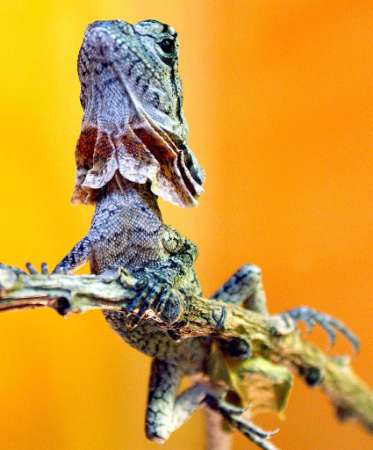
| so here's a gratuitous pic, für Ihre Mühe: |
| and here's a random detail from that month: |
| post-edit Dienstag, 11. Februar 2003 at 13:45:46 |
| sometime around here, had a conf call with Martin and Peter M. about getting values to the IPC from VMS at I---- |
| he found out from Andreas how to make a reference cstic's value known to the IPC |
| there's a BADI business add-in, see above, where you specify the table/structure-field (not the name of the reference cstic) |
| that then get's sent to the IPC when it's called up from the VMS |
| on the IPC side, it checks the known reference cstics, and if there's a match, it sets it to that badi-sent value. |
| Edsger Dijkstra on Computer "Science" |
| Date: Mon, 10 Feb 2003 09:55:17 -0800 |
| From: Stan Mazor |
| Subject: Edsger Dijkstra quote on Computer Science |
| [From asilomar-news, noted by Robert G. Kennedy III in Hackers newsgroup, sent to RISKS by Ken Knowlton. PGN] |
| Edsger W. Dijkstra, *Communications of the ACM*, Mar 2001, Vol. 44, No. 3 |
| In academia, in industry, and in the commercial world, there is a widespread belief that computing science as such has been all but completed and that, consequently, computing has matured from a theoretical topic for the scientists to a practical issue for the engineers, the managers, and the entrepreneurs. [...] |
| I would therefore like to posit that computing's central challenge, "How not to make a mess of it," has not been met. On the contrary, most of our systems are much more complicated than can be considered healthy, and are too messy and chaotic to be used in comfort and confidence. The average customer of the computing industry has been served so poorly that he expects his system to crash all the time, and we witness a massive worldwide distribution of bug-ridden software for which we should be deeply ashamed. |
| For us scientists it is very tempting to blame the lack of education of the average engineer, the shortsightedness of the managers, and the malice of the entrepreneurs for this sorry state of affairs, but that won't do. You see, while we all know that unmastered complexity is at the root of the misery, we do not know what degree of simplicity can be obtained, nor to what extent the intrinsic complexity of the whole design has to show up in the interfaces. We simply do not know yet the limits of disentanglement. We do not know yet whether intrinsic intricacy can be distinguished from accidental intricacy. |
| To put it bluntly, we simply do not know yet what we should be talking about, ... The moral is that whether computing science is finished will primarily depend on our courage and our imagination. |
|
.
.
.
.
.
home
.
english
.
deutsch
.
siteindex
.
.
.
.
.
.
.
.
.
.
.
.
.
.
|